
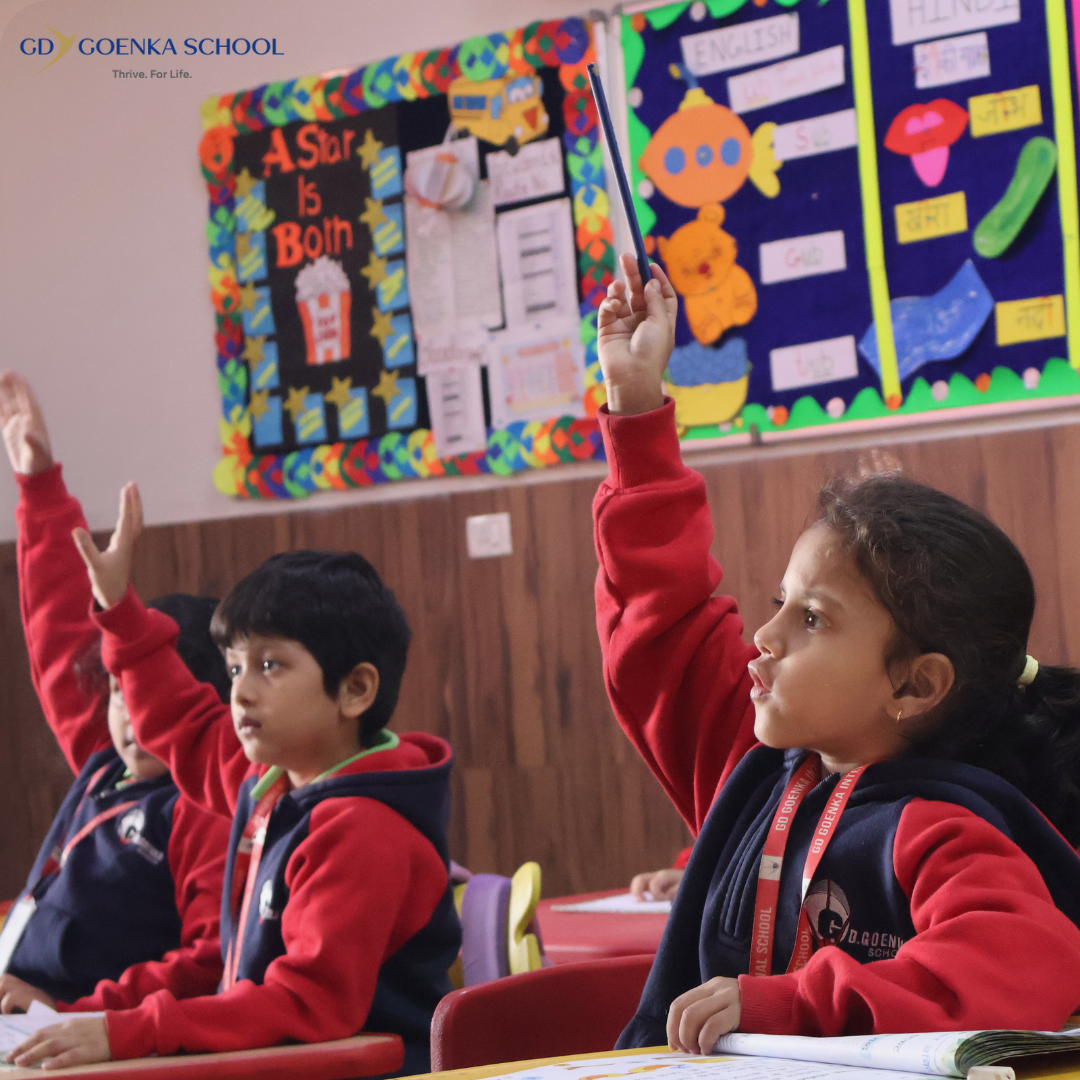
Research shows that 90% of brain development happens before the age of 6. This means the foundation built during early education directly shapes a child’s ability to think critically, collaborate, communicate, and adapt. Yet for decades, India’s learning system has relied heavily on rote memorization, standardization, and exam-based outcomes.
However, the world our children are growing into operates differently.
- 65% of today’s primary school children will work in jobs that don’t currently exist (World Economic Forum).
- India is projected to have the world’s largest workforce by 2030, making skill development more important than ever.
- Digital adoption in India grew over 200% in the last 5 years, showing the speed of technological integration.
These realities make one thing clear: early education in India must evolve from a traditional model to a future-ready, skills-driven learning ecosystem.
1. Digital Literacy: The New Essential Skill
We live in an era where digital tools are part of everyday life. Introducing digital literacy in early education is no longer optional—it’s foundational.
Children today interact with technology intuitively, but intuition is not enough. They need structured exposure that teaches them to:
- Understand digital tools
- Use technology responsibly
- Build early coding and computational thinking skills
- Navigate digital learning platforms
- Develop problem-solving mindsets through tech-enabled experiences
This is where institutions like GD Goenka International School, considered a Best CBSE School, are leading by example with modern AI labs, robotics labs, and smart learning systems. Schools offering such exposure ensure children grow into confident digital natives—not passive consumers of technology.
2. Creativity: The Core of Future Innovation
Automation and AI are replacing repetitive tasks, but creativity remains a uniquely human superpower. A future-ready school environment should nurture creativity through:
- Visual arts
- Music and movement
- Free-expression activities
- Open-ended projects
- Inquiry-led learning environments
For instance, classrooms at many top schools including those ranked among the Best Schools in Greater Noida are moving away from textbook-only learning. Instead, they incorporate storytelling corners, maker spaces, creative labs, and hands-on exploration zones empowering children to think beyond the obvious.
Creativity in early years builds innovation in later years. And innovation is what the next century belongs to.
3. Problem-Solving: Preparing Children for Real-World Challenges
The ability to solve problems is one of the most important 21st-century skills. In early childhood education, problem-solving must be integrated through activities that encourage:
- Logical thinking
- Decision making
- DIY projects
- Game-based tasks
- Strategy-based learning
- Real-life simulations
Science says that children who engage in structured problem-solving activities develop stronger memory, higher resilience, and better academic performance.
Schools like GD Goenka International School, often chosen by parents searching for a CBSE School in Greater Noida West, have adopted practical STEM-based learning that encourages children to discover solutions through experimentation—not memorization.
This shift helps young minds become confident, analytical, and ready for challenges.
4. Experiential Learning: Learning by Doing
One major limitation of conventional education is that children often learn concepts without understanding how they apply in real life. Experiential learning changes this completely.
Experiential learning includes:
- Outdoor exploration
- Theme-based activities
- Science experiments
- Sensory learning
- Field visits
- Interactive storytelling
- Classroom simulations
Studies show that experiential learning increases concept retention by up to 75%, compared to only 5–10% from passive listening.
Many top institutions in emerging educational hubs like Greater Noida now prioritize experiential learning. Schools such as GD Goenka International School, recognized among the Best Schools in Greater Noida, integrate real-world experiences across subjects—from nature walks for environmental science to simulations in futuristic labs for STEM learning.
5. Social & Emotional Learning (SEL): Building Whole Individuals
Academic excellence is important, but emotional intelligence is essential. SEL equips children with:
- Self-awareness
- Empathy
- Conflict resolution
- Teamwork
- Communication
According to UNESCO, children engaged in SEL programs show up to 11% improvement in academic performance and significantly higher confidence levels.
A modern school environment, especially institutions aspiring to be the Best CBSE School, must integrate SEL through:
- Circle-time discussions
- Peer collaboration
- Mindfulness exercises
- Teacher-student interaction beyond curriculum
Holistic growth ensures children are not only intelligent but emotionally strong and socially aware.
6. Learning Environments That Inspire Curiosity
A future-ready classroom must go beyond walls. It should include:
- Smart classrooms
- AI-enabled teaching tools
- Robotics activity zones
- Safe, child-friendly infrastructure
- Libraries designed for inquiry
- Green and sustainable spaces
Schools like GD Goenka International School, widely known as a leading CBSE School in Greater Noida West, are setting benchmarks in infrastructure that supports future-forward learning. Such environments nurture curiosity, one of the most powerful drivers of academic success.
7. The Role of Parents in Future-Ready Learning
To support a new-age educational model, parents must play a collaborative role by:
- Encouraging questions
- Reducing exam pressure
- Promoting creativity at home
- Balancing screen time
- Supporting child’s interests
A strong school-home partnership accelerates growth and helps children flourish in a future-ready ecosystem.
Conclusion: The Time for India to Upgrade Early Education Is Now
India stands at a unique point in history. As the country moves toward becoming a global hub for innovation, technology, and entrepreneurship, children must be prepared from the earliest years.
Foundational education must shift from memory-based to skill-based learning. Schools must integrate digital literacy, creativity, problem-solving, experiential learning, and emotional development to truly prepare students for the future.
Parents looking for institutions that embrace this vision often choose schools like GD Goenka International School, a leading Best School in Greater Noida and a preferred Best CBSE School, because such schools understand that the future belongs to children who are empowered—not just instructed.
To shape tomorrow’s leaders, India must invest in giving every child a future-ready start—and the transformation begins today.
